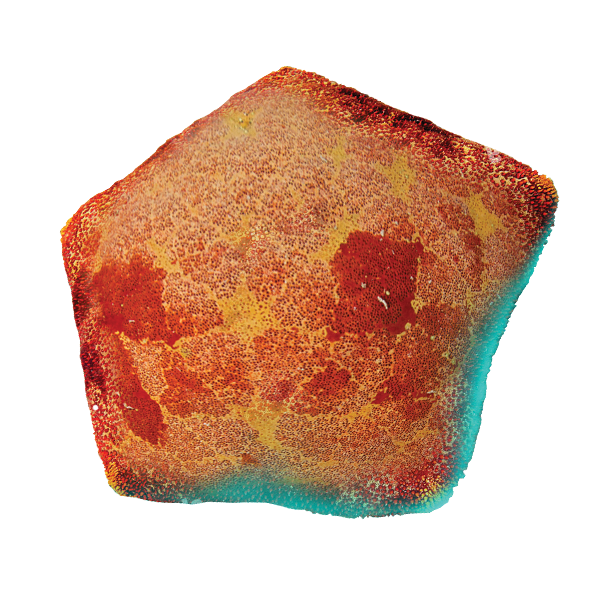
Culcita novaeguineae
Pincushion sea star
Distribution:
Indo-West Pacific
Maximum Size:
10 in (25 cm) in diameter.
Longevity:
Up to 10 years.
Typical depth:
3–100 ft (1–30 m)
Behavior:
Unlike typical “star-shaped” sea stars, the pincushion is pentagonal and inflated, resembling a decorative pillow or a loaf of bread. Interestingly, as juveniles, they look like regular flat, star-shaped sea stars, only puffing up into their “pincushion” shape as they reach maturity. The pincushion is a slow-moving resident of coral-rich lagoons and reef flats. While it looks sedentary, it is an active nocturnal predator of coral polyps. It feeds by everting its stomach through its mouth (located on the underside) to digest coral tissue externally. During the day, it is often found wedged into crevices or resting in plain sight, relying on its tough, calcified skin for protection.
Predators:
Triton’s trumpet snails and certain large puffers and triggerfish.
Did you know?
The pincushion sea star provides a mobile home for other species. Small commensal shrimp (Periclimenes) and even tiny pearlfish often live in the grooves on its underside or inside its body cavity for protection.