
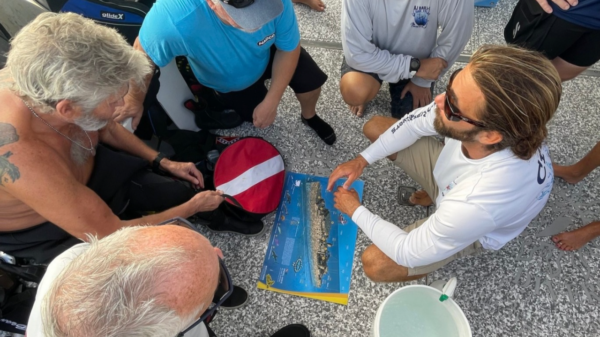
In scuba diving, many factors that influence safety and enjoyment are determined before anyone enters the water. Preparation, clear communication, and a shared understanding of the dive environment all matter. One tool that consistently supports these outcomes, often without much fanfare, is a well-designed dive site map.
Across training, safety research, and day-to-day dive operations, dive site maps are regularly associated with improved situational awareness, lower anxiety, and stronger diver confidence.
Safety begins with situational awareness
Diving incidents are rarely caused by a single dramatic failure. More often, they involve small breakdowns in orientation, awareness, or decision-making that accumulate underwater. For this reason, diver safety guidance places strong emphasis on planning and understanding the environment in advance.
Dive site maps help divers visualize depth changes, navigation routes, entry and exit points, and areas that require extra attention. By giving divers a clearer mental picture of where they are going, maps support safer dive planning and reduce the likelihood of disorientation.
The Divers Alert Network (DAN) regularly highlights situational awareness and planning as key contributors to risk reduction in recreational diving. Visual tools, including site maps used during briefings, directly reinforce these principles.
Source: Divers Alert Network (DAN) – Safe Diving Practices
Reducing anxiety by removing uncertainty
Anxiety in diving is often linked to the unknown rather than to physical difficulty. New sites, unfamiliar layouts, or complex topography can increase stress, particularly for newer or infrequent divers.
When divers can see the structure of a site ahead of time, they are able to mentally rehearse the dive. This reduces cognitive load underwater and helps divers feel more at ease. The same principle is well established in human-factors research, where visualization and pre-task familiarization are known to improve performance and reduce stress in high-risk activities.
Instructors and guides have long sketched dive sites on whiteboards for this exact reason. Clear, reusable maps simply extend that practice in a more consistent and detailed way.
Sources: DAN Europe – Human Factors in Diving and Kahneman, D. Thinking, Fast and Slow.
Confidence comes from feeling prepared
Confidence in diving is not about bravado. It comes from understanding the environment well enough to make calm, informed decisions. Training agencies consistently link confidence to preparation, dive planning, and environmental awareness.
By reinforcing pre-dive briefings and helping divers retain key information, site maps contribute to that sense of preparedness. Divers who know what to expect tend to move more deliberately, monitor their instruments more effectively, and communicate more clearly with their buddies and guides.
This is particularly important in beginner training, guided resort diving, and destinations where sites may be visually complex or unfamiliar.
Source: PADI – Training Philosophy and Dive Planning Principles
A practical tool for operators and instructors
From an operational perspective, clear site maps support more consistent briefings and smoother dives. They help align expectations between guides and guests and reduce confusion once divers are underwater.
Many operators describe better briefings as leading not only to improved safety, but also to more relaxed divers and a better overall experience. In that sense, site maps function quietly in the background, supporting both risk management and enjoyment.
Source: International Association of Dive Operators (IADO) – Best Practices
Where Reef Smart fits into this conversation
At Reef Smart, site maps are approached as a way to support the same fundamentals the industry has always valued: preparation, clarity, and understanding of the underwater environment. The goal is not to replace instructors or guides, but to give them better visual tools to support their briefings and training.
Used thoughtfully, detailed site maps can complement existing teaching methods and help divers build confidence through knowledge rather than guesswork.
Final thought
Across training agencies, safety research, and everyday dive operations, the message is consistent. When divers understand where they are going and what to expect, they tend to feel safer, calmer, and more confident.
Good dive site maps don’t need to be overemphasized to be effective. When done well, they simply do their job, quietly improving awareness, reducing uncertainty, and helping divers enjoy the dive a little more.